
FOMO and the Trade You Didn't Take
 June 21, 2026
7 min read
June 21, 2026
7 min read
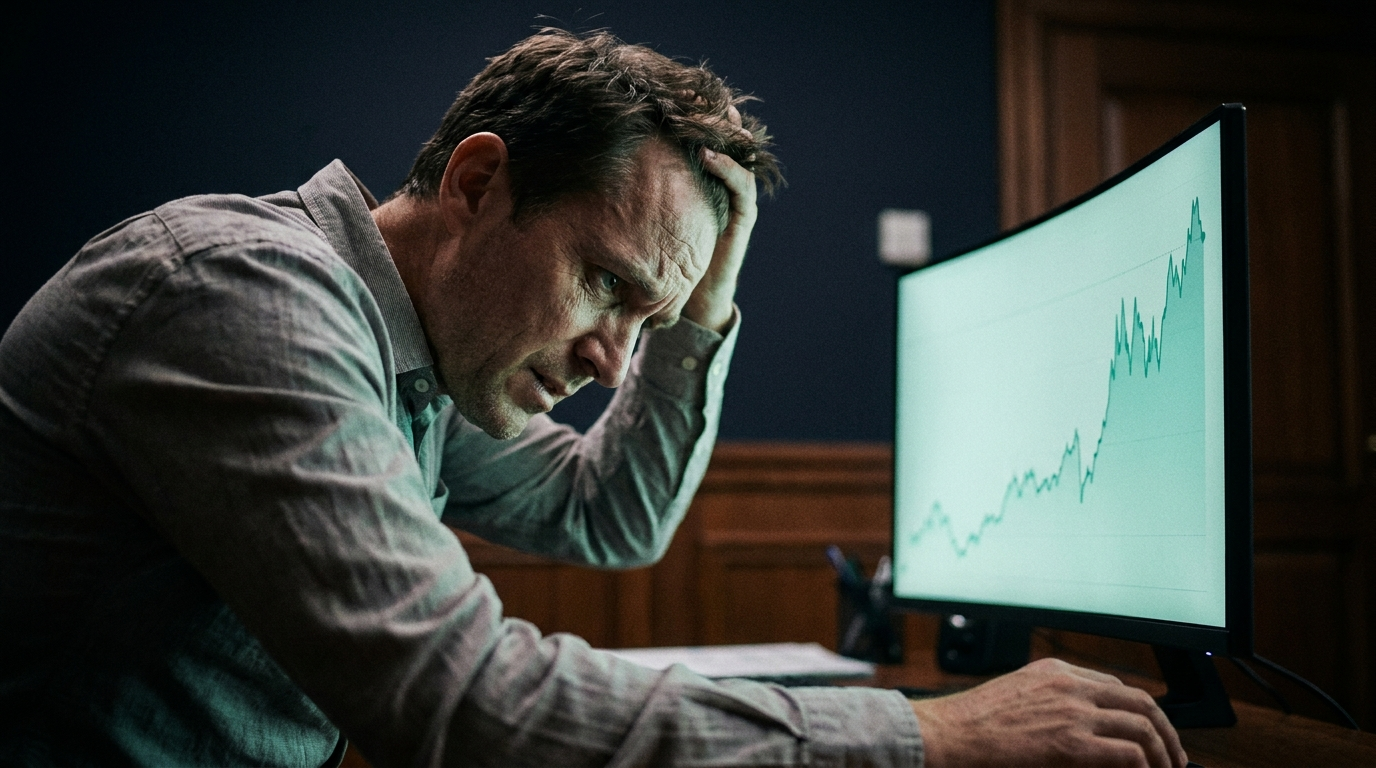
The fear of missing out is one of the most expensive emotions in trading, and it works through a clever distortion: it makes a missed trade feel like a loss. It is not. A trade you did not take cost you exactly nothing. Your account is precisely where it was before the move you watched happen without you. But FOMO reframes that neutral outcome as a painful loss, and the pain pushes you to do the one thing that can actually hurt you, chase the move after it has already happened. The missed trade was harmless; the chase is where the damage lives. Chasing a move you missed is a classic emotional trade, the reaction the CFTC cautions against in its advice not to react to hype; FINRA notes frequent, undisciplined trading erodes results.
This matters because the math of FOMO is upside down. Traders treat missed opportunities as costs to be avoided at all costs, when in reality missing trades is a normal, riskless part of trading, and chasing them is the genuine risk. There will always be another setup. There will not always be a way back from an account damaged by jumping into moves late, at bad prices, with the discipline of someone acting on emotion rather than a plan.
Here is why FOMO is so dangerous and how to handle it. In this guide we will cover why a missed trade costs nothing, what chasing actually is, why there is always another setup, and how to let a missed move go.
Key Takeaways
- A missed trade costs nothing. Your account is unchanged; FOMO only makes the neutral outcome feel like a loss.
- Chasing is the real risk. Jumping in late means buying the part of the move that already happened.
- There is always another setup. Opportunities are not scarce, so missing one is not the emergency it feels like.
- FOMO trades skip your process. A chased entry is taken on emotion, at a bad price, without your usual discipline.
- Reframe missing as normal. Letting good moves go without you is a routine part of trading well.
Table of Contents
- Why a Missed Trade Costs Nothing
- What Chasing Actually Is
- Why There Is Always Another Setup
- How to Let a Missed Move Go
- The TradeFundrr Standard: Miss It and Move On
Why a Missed Trade Costs Nothing
The foundational error of FOMO is treating a missed trade as a loss. It is not a loss; it is a non-event. When a setup runs without you, your account balance does not move. You have lost nothing, risked nothing, and are in exactly the same financial position as before. The only thing that happened is that a profit you never had did not materialize, which is not the same as losing money you did have. FOMO collapses that distinction, and the collapse is what causes the damage.
Understanding this clearly defuses most of the emotion. The regret you feel watching a move you missed is real, but it is regret over a hypothetical, not pain over an actual loss. Once you separate the feeling from the math, the missed trade stops being an emergency. It becomes what it actually is: one of the many opportunities that, for whatever reason, you did not take, with no cost attached and no need to recover anything.
A Non-Event Disguised as a Loss
The mental move that defuses FOMO is to keep insisting on the truth: nothing was lost. The chart going up without you changes your feelings, not your balance. Traders who internalize this stop reacting to missed moves as if they had been robbed, because they recognize there was never anything in their hands to lose. The setup that got away took nothing with it.
Regret Over a Hypothetical
What FOMO actually generates is regret about a path not taken, which is a fundamentally different and far less urgent thing than a loss. Regret invites reflection, maybe; it does not require action. The danger is letting regret over a hypothetical profit drive a real decision to chase, converting a harmless feeling into a harmful trade. Keep the regret where it belongs, as a feeling, and do not let it reach the order ticket.
What Chasing Actually Is
Chasing is what FOMO pushes you toward, and it is genuinely dangerous. When you chase, you enter a move after it has already run, which means you are buying the part of the move that already happened, at a worse price, with less room to your target and more room to a reversal. You have taken the same trade everyone else who is also feeling FOMO is taking, late, which is often exactly when the move is running out of fuel. The chase inverts the usual edge: you are now most exposed precisely when the opportunity is smallest.
Worse, a chased trade skips your process entirely. You did not enter because your setup triggered; you entered because you could not stand watching the move continue without you. That means no proper entry, often no sensible stop, and none of the discipline that normally protects you. A chase is an emotional reaction wearing the clothes of a trade, and because it lacks the structure of a real trade, its downside is frequently unmanaged. This is how a harmless missed move turns into a real, sometimes account-threatening, loss.
The Move You Missed, and the Chase
The trade you did not take cost nothing. The one you chased can cost the account
Chasing means buying the part of the move that already happened. There is always another setup.

Buying the Move That Already Happened
The structural problem with chasing is timing. By definition you are entering after the evidence that made the trade attractive has already played out, which means you are paying for past performance. The favorable risk-reward that existed at the proper entry is gone; what remains is a worse price and a higher chance of buying right before a pullback. Chasing is the systematic purchase of the least attractive part of a move.
A Trade Without Your Process
The deeper danger is that a chased trade has no process behind it. It was not signaled, not planned, and usually not protected with a proper stop, because the entry was driven by the urgency of not missing out rather than by analysis. A trade taken without your process inherits none of your risk discipline, which is precisely why chased trades so often produce outsized losses. The missing structure is the missing safety.
Why There Is Always Another Setup
The engine of FOMO is a sense of scarcity, the feeling that this opportunity is special and missing it means missing out for good. That feeling is almost always false. Markets produce opportunities continuously; setups are not a limited resource that runs out if you miss one. The trader who believes each missed trade is a unique, irreplaceable chance is the one most vulnerable to chasing, because the imagined scarcity makes the missed move feel like an emergency.
Internalizing the abundance of opportunity is one of the most calming realizations in trading. If you know with confidence that another valid setup is coming, missing this one carries no weight. You can let it go without a pang, because there is no shortage to fear. This is not wishful thinking; it is simply how markets work. The trader who trusts that the next setup will come is free to be patient, and patience is the direct antidote to FOMO.
Opportunities Are Not Scarce
The market does not offer a fixed, dwindling supply of trades. It generates new setups as conditions evolve, day after day. The belief that a particular missed trade was your one shot is a distortion produced by the emotion itself, not a fact about the market. Recognizing the genuine abundance of opportunity removes the urgency that makes chasing feel necessary.
Patience Beats the Scarcity Feeling
When you trust that another setup is coming, waiting becomes easy, and waiting is exactly what FOMO cannot survive. The scarcity feeling depends on believing you must act now or lose forever; patience dissolves it by replacing now-or-never with another one will come. A trader who has genuinely accepted that opportunities are abundant simply does not experience missed trades as emergencies, which is the whole battle.
How to Let a Missed Move Go
Beating FOMO is a matter of reframing and a few practical guards. The checklist below helps you let the missed move go without chasing it.
- Name the truth: nothing was lost. A missed trade leaves your account unchanged, so there is nothing to recover.
- Refuse to enter without your setup. If the proper entry has passed, the trade is over for you, full stop.
- Trust that another setup is coming. Opportunities are abundant, so missing one is not an emergency.
- Wait for the next clean entry. Patience, not chasing, is how you participate in the next move properly.
- Notice the urge as a signal to pause. The feeling of needing to get in now is the cue to do nothing.
The Entry Passed, So the Trade Is Over
The cleanest rule for FOMO is mechanical: if your proper entry has already gone, the trade no longer exists for you. There is no late version of it worth taking, because the late version is the chase. Telling yourself the trade is simply over, not delayed, removes the option of chasing entirely. You did not take it, and that is the end of it, not an invitation to take a worse version.
The TradeFundrr Standard: Miss It and Move On
FOMO is dangerous because it disguises a harmless non-event, a missed trade, as a loss, and pushes you to recover it by chasing, which is the one move that actually risks your account. The cure is to keep the math straight: missing a trade costs nothing, chasing one can cost a great deal, and there is always another setup coming. Hold those three truths and the fear of missing out loses its grip.
A structured, simulated environment is well suited to building this discipline, because you can watch setups run without you and practice the skill of letting them go, without your savings on the line while you learn that missing trades is survivable and chasing them is not. The reframe, that a missed move is a non-event and patience always pays better than a chase, is a mindset that transfers completely to any account.
The trade you did not take is not the problem; the trade you chase is. TradeFundrr gives you a structured, simulated environment with clear rules to develop the patience to wait for your own setups rather than chasing someone else's move. Name the truth that nothing was lost, refuse any entry your process did not signal, trust that the next opportunity is coming, and let the missed move go.
Frequently Asked Questions
Why is a missed trade not actually a loss?
Because your account balance does not move when a setup runs without you. You lost nothing, risked nothing, and are in the same financial position as before. The only thing that happened is that a profit you never had did not materialize, which is different from losing money you did have. FOMO collapses that distinction and makes the neutral outcome feel painful.
What does it mean to chase a trade?
Chasing means entering a move after it has already run, buying the part that already happened at a worse price, with less room to your target and more room to a reversal. It usually skips your process: no proper entry, often no sensible stop, and none of your normal discipline. That missing structure is why chased trades so often produce outsized losses.
Why is chasing more dangerous than missing?
Because missing costs nothing while chasing puts your account at risk in the least favorable way. You enter late, when the favorable risk-reward is gone and a pullback is more likely, and you do it without your usual process or protection. A harmless missed move becomes a real, sometimes account-threatening, loss the moment you chase it.
How do I stop chasing trades?
Treat a passed entry as the end of the trade, not a delayed one. If your proper entry is gone, the trade no longer exists for you, which removes the option of chasing. Name the truth that nothing was lost, refuse any entry your setup did not signal, and trust that another opportunity is coming so the urge to get in now loses its force.
What if I keep missing good trades?
Missing trades is a normal part of trading well, not a failure, and opportunities are abundant rather than scarce. If you are consistently missing valid setups you could reasonably take, that is worth reviewing in your process, but the answer is to refine your entries calmly, never to chase. The next clean setup is always coming.
Why does FOMO feel so urgent?
Because it runs on a false sense of scarcity, the feeling that this opportunity is special and missing it means missing out for good. Markets actually produce setups continuously, so that scarcity is an illusion created by the emotion. Trusting that another valid setup is coming dissolves the urgency, which is why patience is the direct antidote to FOMO.
Can a simulated account help me beat FOMO?
Yes. A structured, simulated environment lets you watch setups run without you and practice letting them go, without your savings on the line while you learn that missing trades is survivable and chasing them is not. The reframe that a missed move is a non-event, and that patience beats a chase, transfers directly to any account.
How do I deal with FOMO in a funded account?
Accept that missed trades are not losses, and chasing them usually is. Wait for your next planned setup rather than jumping in late at a worse price. In a funded account, a chased entry often sits far from a sensible stop, which risks your daily loss limit.
Why is chasing a missed trade dangerous?
Because you enter late, at a worse price, with your stop now far away, so the risk-reward is poor and a reversal can breach your limits. FOMO replaces your plan with impulse. In a funded account, letting a trade go is cheaper than chasing it.
Miss it and move on
Build the patience to wait for your own setups in a structured, simulated environment with clear rules.
Get Funded →